IoT Monitoring for
Underground Mines
ROSSMA Ex db wireless sensors for coal and ore mines. Dual certification: 1Ex db IIC T5 Gb X (general industrial) and PB Ex db I Mb X (Mining, Group I). Compliant with GOST R, TR CU 012/2011
Underground Mining Challenges
Methane, no connectivity, extreme conditions — safety challenges in underground mines
Methane & Explosion Risk
Coal mines continuously release methane (CH₄). Concentrations of 5–15% are explosive. Fixed gas monitoring is expensive and cannot cover every heading. Only Group I equipment is permitted in methane zones.
Manual Gas Monitoring
Pre-shift gas measurements use portable instruments 1–2 times per shift. Between checks, changes in CH₄, CO, CO₂ levels go undetected. Impossible to track trends over a shift.
No Communications Underground
Conventional wireless systems fail in tunnels: RF signals attenuate around bends. Cable systems are vulnerable to roof falls and costly to maintain across long horizons.
Extreme Conditions
Humidity up to 100%, coal and rock dust, temperatures −55 to +80 °C, potential flooding. Standard electronics fail quickly. IP66 and explosion-proof enclosures are required.
Regulatory Requirements
Authorities require continuous gas atmosphere monitoring in methane mines. TR CU 012/2011, IEC 60079 — strict equipment standards. Fines and work stoppages for violations.
Equipment Tracking
Mine cars, shearers, conveyor sections — hundreds of assets underground. Without automated tracking of movement and operating hours, maintenance planning and logistics are impossible.
ROSSMA Capabilities for Underground Mines
Dual Ex db certification, underground LoRaWAN, autonomous operation — complete mine monitoring
Dual Ex db Certification
Each sensor available in two enclosure variants: aluminium A356 (1Ex db IIC T5 Gb X — general industrial) and stainless steel AISI 316 (PB Ex db I Mb X — Mining, Group I for coal mines). Material switcher on the product page.
Pre-shift & Continuous Gas Monitoring
Dry Contact Ex db and Analog Ex db connect to fixed gas detectors (CH₄, CO, CO₂, O₂). Data transmitted via LoRaWAN to the surface every 30–60 seconds. Alarms when limits are exceeded.
Underground Equipment Vibration Monitoring
Tilt Counter Ex db monitors tilt and vibration of conveyor sections, fans, pumps. Early bearing wear detection 2–8 weeks before failure. Minimizes emergency shutdowns in hard-to-reach headings.
Underground LoRaWAN Network
LoRaWAN Class A adapted for underground use. Repeaters in headings provide coverage. 868 MHz signals penetrate tunnel bends better than WiFi. Up to 2 km range in straight tunnels.
Up to 10-Year Battery Life
FANSO ER34615M battery (3.6V, 14,000 mAh) provides up to 10 years at 10–60 min transmission intervals. No external power — fully autonomous sensor. Critical for remote and hard-to-access headings.
ROSSMA.NETS Integration
Surface control room: mine level schematics, gas trends, ISA-18.2 alarms. Integration with mine SCADA via Modbus TCP, OPC UA, MQTT. Regulatory compliance reports.
Architecture: From Heading to Control Room
Ex db sensors → underground LoRaWAN → NETS Cloud → Surface control room
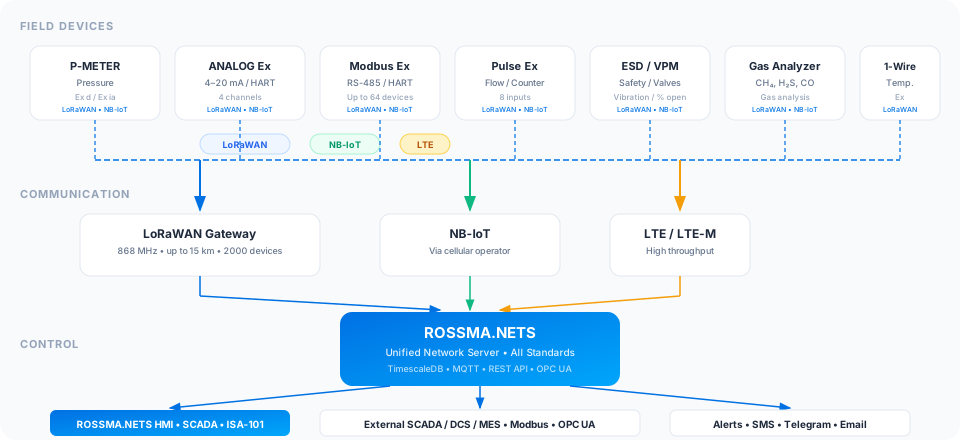
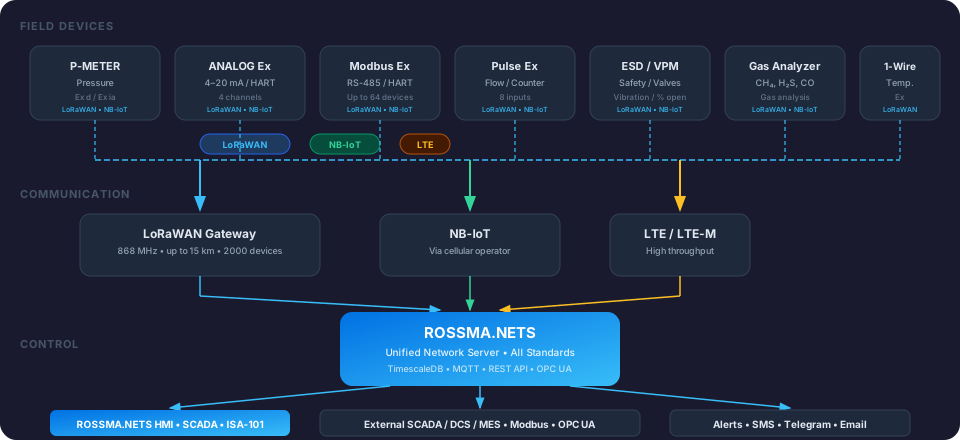
Ex db Equipment for Underground Mines
Dual certification: aluminium (IIC) and stainless steel (Mining Group I)
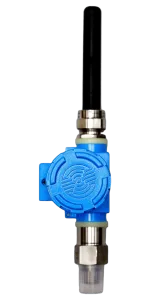
Autonomous Wireless Pressure Transmitter ROSSMA IIOT-AMS P-METER
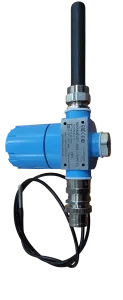
ROSSMA IIOT-AMS 1-Wire Ex db — Explosion-Proof LoRaWAN Temperature Sensor
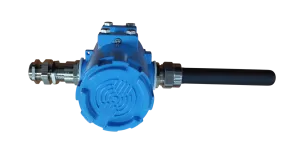
ROSSMA IIOT-AMS Analog Ex db — Explosion-Proof 4-20 mA LoRaWAN Transmitter
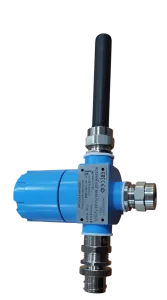
ROSSMA IIOT-AMS Dry Contact Ex db — Explosion-Proof LoRaWAN Dry Contact Sensor
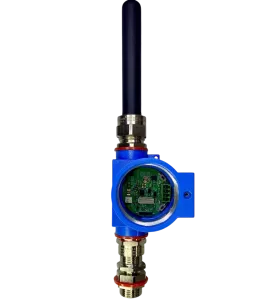
ROSSMA IIOT-AMS Modbus Ex db — Explosion-Proof Modbus-LoRaWAN Gateway
ROSSMA IIOT-AMS Pulse Ex db — Explosion-Proof LoRaWAN Pulse Counter
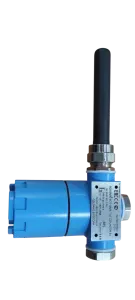
ROSSMA IIOT-AMS Tilt Counter Ex db — Explosion-Proof LoRaWAN Tilt/Vibration Counter
Economics: Wired Monitoring vs ROSSMA Ex db
Cost of setting up monitoring in underground workings
| Parameter | Wired Monitoring | ROSSMA Ex db IoT |
|---|---|---|
| Additional monitoring point | $1,500–3,000 (armoured cables + mine install) | Ex db sensor — price on request |
| Sensor installation | 3–5 days (armoured cables) | 15–30 minutes (mount & activate) |
| Gas monitoring | Fixed systems + cable infrastructure | Dry Contact Ex db + gas detector |
| Vibration diagnostics | Portable analyzer (walk-around) | Tilt Counter Ex db online 24/7 |
| Maintenance | Periodic cable replacement (corrosion, roof falls) | Battery replacement every 10 years |
| Scaling | New project + approvals + cables | Add sensor in 15 min |
Key Economic Advantages
Frequently Asked Questions
What is the difference between 1Ex db IIC T5 and PB Ex db I Mb?
Are sensors suitable for methane coal mines?
How does LoRaWAN work underground?
What is the sensor battery life in a mine?
What certifications do the products have?
Compatible with mine SCADA?
Can we run a pilot project?
Implementation cost?
Ready to Digitize Your Mine?
Discuss a wireless monitoring pilot project — from heading to control room